Why Post-Renovation Cleaning Is Essential: Health Risks of Construction Dust
Learn why professional post-renovation cleaning is crucial for your health. Construction dust dangers and why DIY cleaning is not enough after renovations.
22 Cleaning Team
Cleaning Experts
Why Post-Renovation Cleaning Is Essential
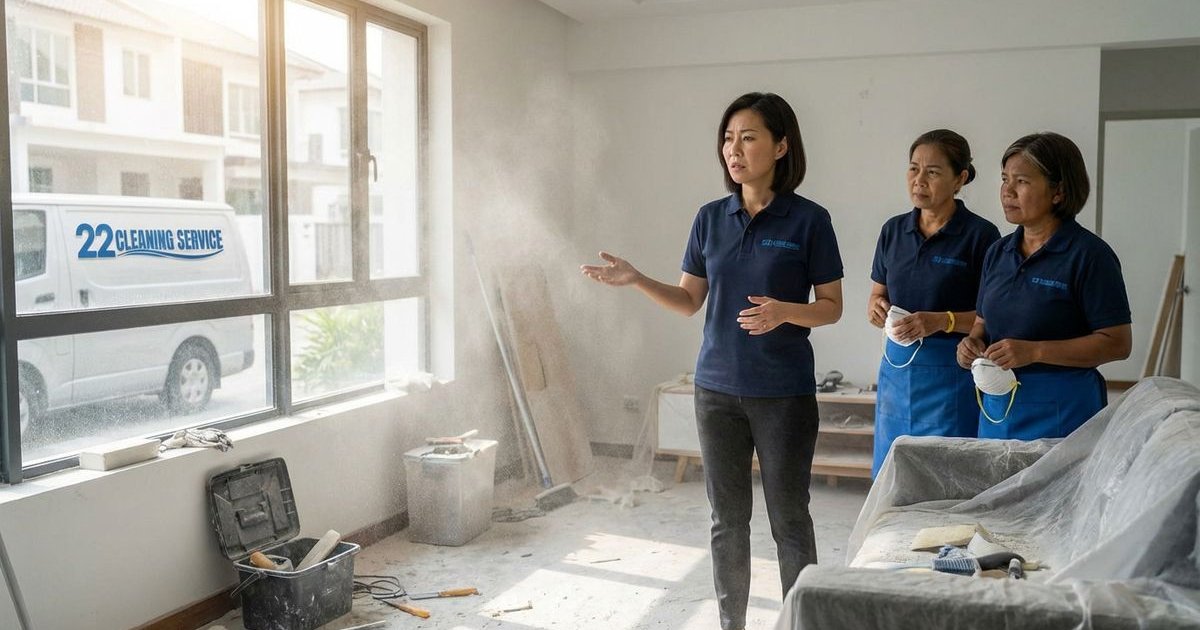
You have finally finished your renovation project in Kuala Lumpur or Selangor. The contractors are gone, and the space looks beautiful, but there is likely a layer of fine white dust coating every surface.
We know the temptation is to grab a broom and start sweeping immediately so you can move in. This impulse is understandable, but handling construction dust requires a different approach than your standard weekly cleanup. Our team has seen many homeowners struggle with “ghost dust” that reappears days after they thought they were finished. This happens because construction particles are different from ordinary household dust.
Contact 22 Cleaning for professional help, or read on to understand why this specific type of cleaning is critical for your health.
The Hidden Dangers of Construction Dust
Construction work generates fine particulate matter that poses serious risks beyond simple messiness. The Department of Occupational Safety and Health (DOSH) in Malaysia classifies several common construction byproducts as hazardous to health.
Silica Dust (The Invisible Threat) This is a major concern in Malaysian homes where concrete walls and tile floors are standard. Crystalline silica is released when cutting concrete, ceramic tiles, or stone.
- Why it matters: Inhaling these microscopic particles can lead to silicosis or lung scarring.
- The risk: These particles are invisible to the naked eye and can remain airborne long after the work stops.
Wood Dust and Cellulose Carpentry work for built-in cabinets and wardrobes creates significant wood dust.
- The reaction: It often acts as a sensitizer, triggering asthma attacks or skin irritation.
- Mold connection: In Malaysia’s humid climate (often exceeding 70% humidity), organic wood dust that settles in damp corners becomes an instant breeding ground for mold.
Volatile Organic Compounds (VOCs) New paint, vinyl flooring, and adhesives release gases like formaldehyde.
- The “New House” smell: That distinct odor is actually chemical off-gassing.
- Climate factor: Our local tropical heat accelerates this process, causing higher concentrations of fumes to build up in closed rooms.
Why Regular Cleaning Is Not Enough
Standard household cleaning tools are simply not designed to handle the volume and type of debris left behind by contractors.
1. Equipment Limitations We often warn clients that using a standard domestic vacuum on construction dust is a quick way to destroy the motor.
- The failure point: Fine plaster and cement dust clog standard filters instantly, causing the machine to overheat.
- The result: Instead of trapping dust, a regular vacuum often blows fine silica particles back into the air through its exhaust.
2. The “Settling” Phenomenon Construction dust behaves like a fluid.
- Where it goes: It drifts into air conditioning vents, settles inside deep cupboards, and coats the tops of ceiling fans.
- The surprise: You might wipe a surface clean today, only to find a new layer of white powder tomorrow as airborne particles slowly settle.
3. Stubborn Residues Paint splatters and adhesive marks on your new tiles require more than just water.
- The challenge: Scrubbing these with abrasive tools can scratch your brand new flooring.
- The solution: Specialized solvents are needed to dissolve the residue without damaging the surface finish.
Health Symptoms from Renovation Dust
Exposure to these particles can trigger immediate physical reactions.
Immediate Warning Signs:
- Persistent coughing or throat irritation
- Watery, red eyes (often mistaken for tiredness)
- Skin rashes or itchiness
- Headaches from chemical fumes
Long-term Risks: Continued exposure to silica and chemical residues can lead to chronic respiratory issues. Children and those with existing allergies are particularly susceptible to the “haze-like” quality of indoor construction dust.
Vulnerable Groups at Higher Risk
Certain members of your household require absolute protection from these contaminants.
Take extra precautions for:
- Infants and Children: Their lungs are still developing and they breathe more rapidly than adults.
- Elderly Family Members: Older adults often have lower respiratory resilience.
- Asthma Sufferers: Even small amounts of dust can trigger severe attacks.
- Pregnant Women: Chemical exposure should be minimized during pregnancy.
We strongly advise that these vulnerable groups do not enter the property until a full deep clean has been completed.
What Professional Post-Renovation Cleaning Addresses
Professional cleaners use a different grade of equipment to ensure the home is safe.
Equipment Comparison:
| Feature | Household Setup | Professional Setup |
|---|---|---|
| Vacuum Filtration | Standard Filter (releases fine dust) | Industrial HEPA Grade (traps 99.97% of particles) |
| Suction Power | Low to Medium | High Velocity (extracts deep dust) |
| Floor Care | Mop and Bucket | Single-Disc Scrubbers (for tile residue) |
| Reach | Step Ladder | Scaffolding/Extension Poles |
Key Areas We Target:
1. Air Quality Control Our team vacuums air vents and cleans filter meshes to prevent dust from recirculating. This is crucial in Kuala Lumpur where split-unit air conditioners are standard and easily clogged.
2. Detailed Surface Treatment We remove paint spots from window frames and cement residue from tiles. This meticulous removal reveals the true condition of your finishes.
3. Hidden Contamination Zones Dust hides in places you rarely check.
- Light fixtures: Inside diffuser covers.
- Cabinet tracks: The sliding mechanisms of your wardrobes.
- Door hinges: The greasy lubricant often traps silica dust.
The Right Timeline for Post-Renovation Cleaning
Timing is everything when scheduling your clean.
Wait for these milestones:
- Contractor Completion: Ensure all drilling, cutting, and rectification work is 100% finished.
- Debris Removal: Large boxes and scrap materials should be cleared out first.
- Paint Curing: Allow at least 48 to 72 hours for paint to dry fully.
Strategic Tip: We recommend scheduling the deep clean before your loose furniture arrives but after the built-ins are done. This allows cleaners to reach every corner of the floor without obstruction.
The “Defect” Inspection: Many homeowners schedule cleaning right before their final defect inspection. A spotless floor makes it much easier to spot scratches, chips, or uneven tiling that you need to report to your contractor.
Cost of NOT Cleaning Properly
Skipping this step often leads to higher costs down the road.
1. Air Conditioner Damage Renovation dust turns into a sludge when it mixes with condensation in your AC unit.
- The cost: A chemical overhaul for a clogged wall unit can cost between RM 150 and RM 250 per unit.
- The risk: Blocked drainage pipes often leak water, damaging your new parquet or vinyl flooring.
2. Medical Expenses Treating respiratory flare-ups or skin allergies can be costly and stressful.
- The reality: Prevention is significantly cheaper than repeated visits to the clinic for asthma complications.
3. Premature Wear Grit left on floors acts like sandpaper.
- The damage: Walking on dusty floors slowly grinds the shine off your new tiles or timber.
What to Expect from Professional Service
A professional service follows a systematic workflow to ensure no area is missed.
Phase 1: Rough Debris Removal We remove larger items like leftover masking tape, protective plastic, and cardboard pieces.
Phase 2: High-Level Dusting Gravity works for us here. We start cleaning from the ceiling fans, light fixtures, and tops of cabinets so dust falls to the floor.
Phase 3: Vacuum and Extraction Industrial vacuums are used to extract dust from every corner, track, and crevice. This step removes the bulk of the dry contaminants.
Phase 4: Wet Wipe and Polishing We wipe down all surfaces, including walls, skirting boards, and inside cabinets. Glass surfaces and mirrors are polished to a streak-free shine.
Phase 5: Floor Scrubbing The final step involves deep cleaning the floors to remove any stubborn grime or hazy residue.
Prevention Tips During Renovation
You can minimize the mess before we even arrive.
Proactive measures include:
- Seal the Room: Use plastic sheeting and masking tape to seal off doors to rooms not being renovated.
- Protect Air Vents: Cover AC units with plastic to prevent dust ingestion.
- Daily Sweeps: Ask your contractor to perform a rough sweep at the end of each day.
- Open Windows: Ventilation helps carry airborne particles out of the house.
Even with these steps, fine dust will find a way in, but the volume will be manageable.
Conclusion
Post-renovation cleaning is about more than just making your home look good. It is a necessary safety measure to protect your family from hazardous silica dust, chemical residues, and potential mold growth.
We want you to enjoy your new home without sneezing or worrying about what you are breathing. Contact 22 Cleaning for professional post-renovation cleaning. Our team has the industrial equipment and local expertise to turn your dusty construction site into a safe, sparkling sanctuary.
Tags:
Need Professional Cleaning?
Let our expert team handle the cleaning while you focus on what matters most.
Get Free QuoteRelated Articles

5 Benefits of Professional Office Cleaning for Malaysian Businesses
Discover how professional office cleaning boosts employee productivity, reduces sick days, and improves your company image in Malaysia.

Chinese New Year Cleaning Tips: Get Your Malaysian Home Ready for CNY
Traditional CNY cleaning guide for Malaysian homes. What to clean, when to start, and how to prepare your house for a prosperous new year.

How to Hire a Safe and Trustworthy Maid Service in Malaysia
Essential safety tips when hiring maid services in Malaysia. What to look for, questions to ask, and red flags to avoid.